
LAT Nitrogen signed Antwerp Declaration for a European Industrial Deal
The Antwerp declaration: boosting EU industrial competitiveness
In a move to safeguard the future of European manufacturing, LAT Nitrogen, a premier European provider of nitrogen-based fertilizers and industrial chemicals, has officially joined over 1,300 industrial leaders in signing the Antwerp Declaration for a European Industrial Deal. The declaration, first launched in February 2024, has rapidly become the focal point for industry voices demanding that the European Green Deal be matched by a robust Industrial Deal. For LAT Nitrogen, this momentum represents a critical turning point in ensuring that the transition to a net-zero economy does not lead to the deindustrialization of the continent.
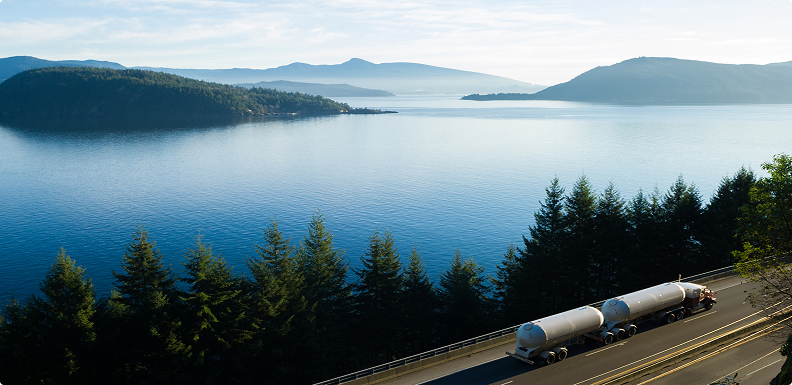
A tanker truck drives along a coastal highway overlooking a calm bay, framed by forested hills and distant mountains.
The economic crossroads: high costs and global competition
The European nitrogen industry currently faces an unprecedented "perfect storm" of economic pressures. As a sector that relies heavily on natural gas as both an energy source and a raw material, European producers are struggling with energy prices that remain significantly higher than those of their global competitors in the U.S. and China.
Key challenges cited by industry leaders include:
Energy Price Disparity: EU gas prices have historically fluctuated at levels 4-5 times higher than those in competing regions, making domestic production of ammonia and urea increasingly difficult to sustain.
Regulatory Complexity: An "over-reporting" burden and overlapping legislations have created a "slow-motion decline" in some manufacturing sectors.
Import Pressures: A surge in low-cost fertilizer imports from regions with less stringent environmental regulations—and continued dependency on Russian imports—threatens Europe’s strategic autonomy and food security.
Bridging the Gap: From Strategy to Action
Bridging the gap: From strategy to action
The Antwerp Declaration outlines 10 concrete actions to restore competitiveness. These include streamlining state aid for energy-intensive industries, ensuring a reliable supply of raw materials, and creating a "Clean Tech Deployment Fund."
The timing is particularly significant as the European Commission moves forward with its Clean Industrial Deal, a major policy framework aimed at lowering energy bills and boosting demand for low-carbon products. With critical milestones like the Industrial Decarbonisation Accelerator Act and the Circular Economy Act on the horizon for 2025 and 2026, the industry is calling for these plans to be converted into immediate, tangible relief for manufacturers.